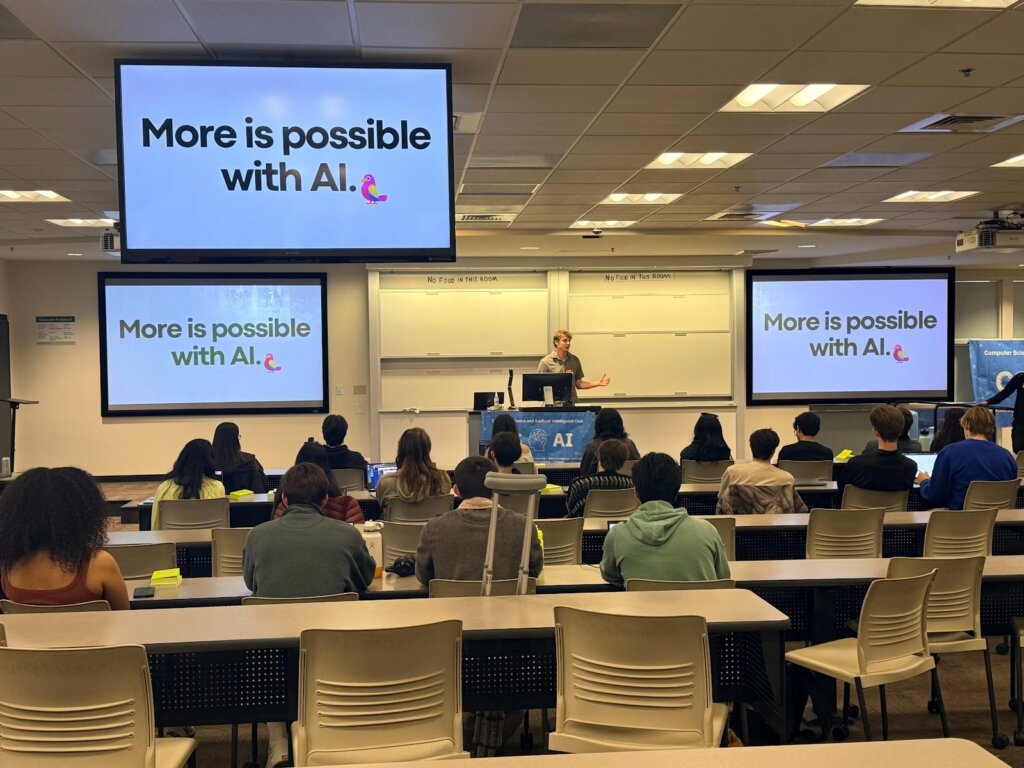

Parker Jones, OpenAI Ambassador and PolyPrompt organizer, reflects on building a more thoughtful AI culture on campus
As artificial intelligence continues to shape the future of technology and work, Cal Poly students are increasingly engaging with these tools in meaningful and applied ways. For Parker Jones, OpenAI Ambassador and the creator of PolyPrompt, that engagement needed to be thoughtful, practical, and grounded in real student experiences. PolyPrompt was created to provide that space. By bringing together a diverse group of students to design AI-powered products for their peers, the weekend focused not only on technical excellence, but also on ethical responsibility and real-world impact. In this conversation, Parker reflects on the vision behind PolyPrompt, the values that shaped it, and his hopes for the future of AI and applied computing at Cal Poly.
ORIGIN
1. What problem were you hoping PolyPrompt would address?
A lot of the loudest voices around AI feel out of touch. On one side, people hype up polished demos that do not really hold up in the real world. On the other, people fixate on the worst cases and act like the whole technology should be written off entirely. I think there is a real need for a more grounded, positive path forward in our relationship with AI. I hoped PolyPrompt could help create that on campus, both for the students who got to build firsthand and for the people who got to see what they made.
2. Why center the weekend around building AI products specifically for students?
We’re all students, so it gave the weekend a very real point of view. A lot of what people see around AI is either abstract or low-stakes. It is framed as helping with spreadsheets or booking flights, but not always as solving problems that feel immediate or meaningful. I wanted the weekend to center on products that were clearly useful, clearly human, and clearly grounded in problems students actually face. We do not just need to talk about AI’s potential to do good. We need to do the harder work of actually building toward it.
DESIGN
3. You intentionally created balanced, cross-disciplinary teams. What was the thinking behind that?
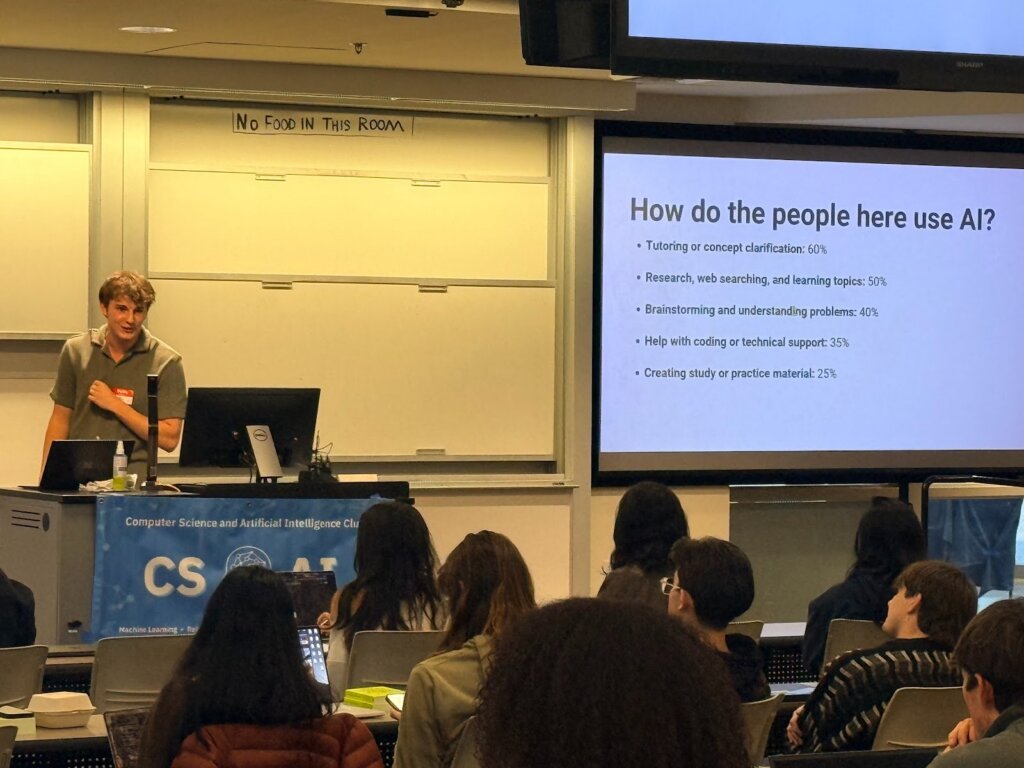
AI is lowering the barrier to entry, and I think that matters a lot. Over time, the old labels around who is “technical” and who is not are going to matter less. Our generation is already very fluent with technology, and I believe people from a wide range of backgrounds can use AI pragmatically to contribute to meaningful work. I also think school does not give us enough chances to build with people outside our own disciplines, so it was important to me that teams included students from outside computing who could bring different instincts and perspectives.
4. Ethical impact was part of how projects were evaluated. Why was that important to you?
It goes back to what I believe PolyPrompt needed to represent. The world, and this campus too, needs a better story about AI. We did not need another gimmick or another project that used AI just because it could. I wanted students building things that were genuinely useful, thoughtful, and good for other students. If we are going to push this technology forward, ethical impact cannot be an afterthought.
5. There were over 200 applicants, but only 70 spots. How did you decide who got in?
It was important to me that the participant group reflected a real mix of people and perspectives. I worked hard to make sure there was diversity across background, discipline, and gender. I especially wanted to create space for students outside traditional computing majors, including people in areas like journalism and manufacturing engineering. More than anything, though, I was looking for students who were thoughtful, passionate, and realistic about what AI can do. I believe those students are the best representatives of where this technology is actually headed, and that really showed in the projects that rose to the top.
OUTCOMES
6. What impressed you most about the projects that rose to the top?
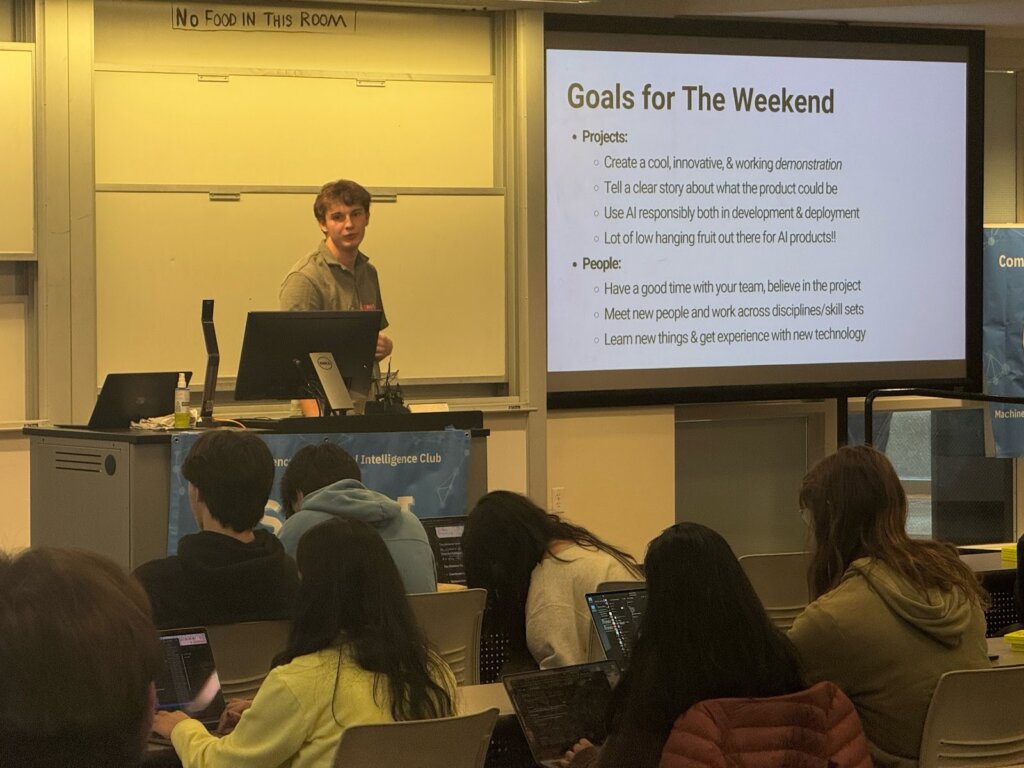
What impressed me most was that almost no team seemed constrained by what they could build in a single weekend. With AI, the question was less “Can you build it?” and more “What is worth building, and can you prove why it matters?” That is exactly the shift I hoped to see. The strongest projects were not just technically impressive. They were coherent, useful to students, clearly differentiated, and made possible by teams that really pushed themselves to build ambitiously with AI.
7. What do you hope PolyPrompt contributes to the future of AI and applied computing at Cal Poly?
I think some of the most important effects are the less visible ones. A lot of participants told me the weekend pushed them to really reckon with these tools, to figure out what works for them, where these tools fit into their lives, and where they do not. I hope PolyPrompt was genuinely transformative for the people who participated. I also hope the event and the projects that came out of it are inspiring to students at Cal Poly and beyond.
8. Do you see this event happening again next year?
I do. I can see it getting bigger, but I also do not want it to lose the tight-knit feeling that made it special. I started PolyPrompt because I felt there was a real opportunity here, and I think that opportunity will only grow year over year. My hope is that PolyPrompt grows with it, becomes lasting, and ultimately outlives me. I also want to take the chance to thank everyone who made it possible: the students who participated, CS+AI and CodeBox for co-sponsoring and helping run the event, Noyce, DXHub, and ASI for helping fund it, and the judges for giving their time and energy to it. If PolyPrompt proved one thing, it is that meeting this moment in AI is something we have to do together and in the open.